
Home batteries
A home battery stores solar power for the evening and keeps the circuits you choose running when the grid goes down. We install batteries with new solar and add them to systems already on the roof across the Front Range.
Written price before work starts
The price depends on how much you want to back up, whether you already have solar and the electrical work at your panel.
How a home battery works
Where the power goes, hour by hour.
Tap through a day. The flows show where the power goes, from the panels to the house, the battery, the car and the grid.
Panels power the house first. Extra power charges the battery and the car, and anything left goes back to the grid.
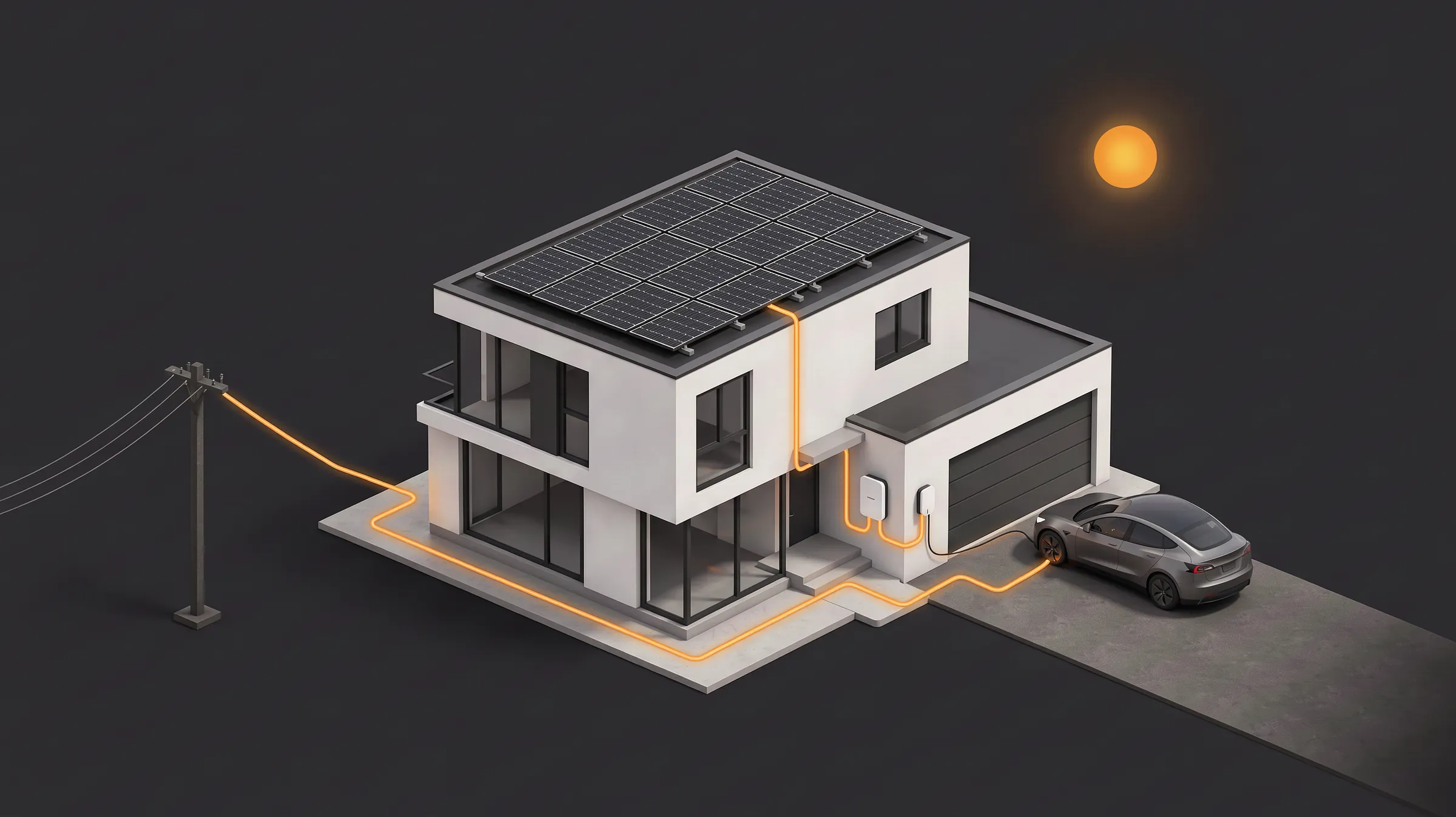
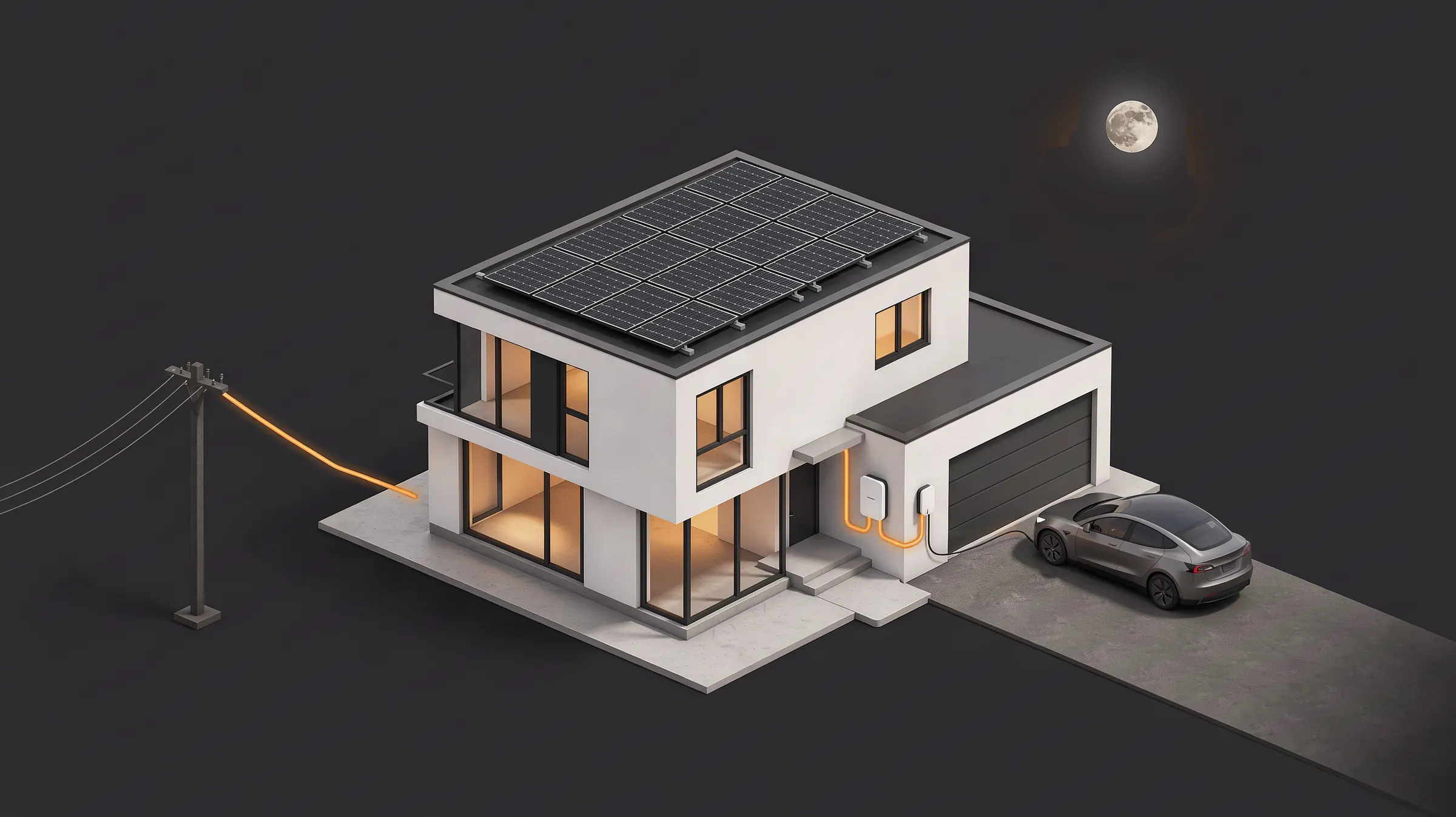
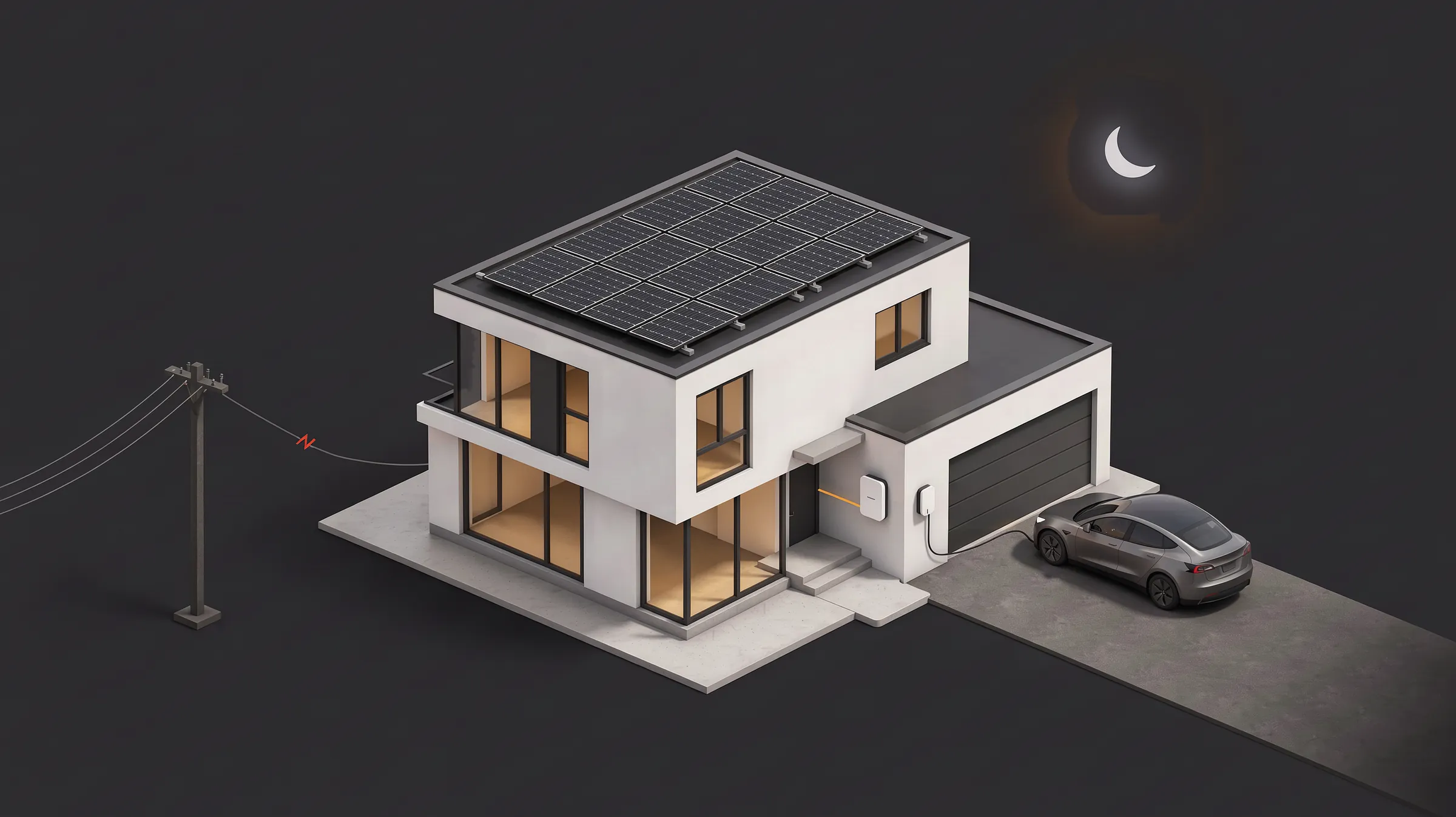
Illustration. How long a battery runs depends on its size and what you choose to keep on.
Good fit if
- You want the lights, fridge and Wi-Fi on during outages
- You already have solar and want to use more of it at night
- You are adding solar and want storage from day one
- You want to know which utility programs apply to you
What does a home battery do?
A home battery stores power so you can use it later. On a sunny day your panels make more than the house needs. Without a battery, the extra goes to the grid. With one, it charges the battery first, and the house runs on that stored solar into the evening. When the grid goes down, the battery keeps the circuits you picked running. This page is part of our solar hub.
Tap through the diagram above to see where the power goes on a sunny day, in the evening and during an outage. The house next door with solar and no battery goes dark in an outage. Yours does not.
Why does solar without a battery shut off in an outage?
It is a safety rule. Grid-tied solar must stop sending power into the lines when the grid goes down, so line crews are not working on wires that something is still feeding. The rule comes from the IEEE 1547 and UL 1741 interconnection safety standards, and every grid-tied inverter is built to it.
A battery system gets around this the right way. When the grid drops, it opens a switch that cuts the house off from the grid, and then powers your backed-up circuits on its own. The house becomes its own small island, and nothing goes back out on the lines. In daylight the panels keep making power and recharge the battery.
The full answer, with sources, is in does solar work during a power outage.
Essentials or the whole home?
This is the main decision, and it drives the size and the price.
Essentials. You pick the circuits that matter: the fridge, the furnace fan, some lights, the Wi-Fi and outlets for phones and a laptop. A smaller setup covers them, and the stored power lasts longer because you are only running what you need.
Whole home. Most or all of the house stays on, including bigger loads. That takes more battery and more equipment at the panel, and big loads like an EV charger, a range or central air drain it faster.
Most Front Range homeowners land in between. We walk your panel with you, circuit by circuit, and write down what stays on. We do not promise a number of hours or a battery size on the phone, because both depend on what you choose.
Can I add a battery to the solar I already have?
Often, yes. How it ties in depends on the equipment you already have, and the combiner decides which battery fits, so the first step is reading your existing equipment, not picking a battery. The full answer is in adding a battery to existing solar. Either way we start with three things: your inverter's brand and model, your monitoring app, and your permit and utility approval papers. If your installer is no longer around, see solar service and repair.
What about Xcel Energy's Renewable Battery Connect?
Xcel Energy runs a program called Renewable Battery Connect for customers with solar and a battery in its Colorado territory. Rules and funding change, so ask us what applies when you call. If you are served by a city utility or a co-op, its programs are different.
What does a battery look like on the wall?
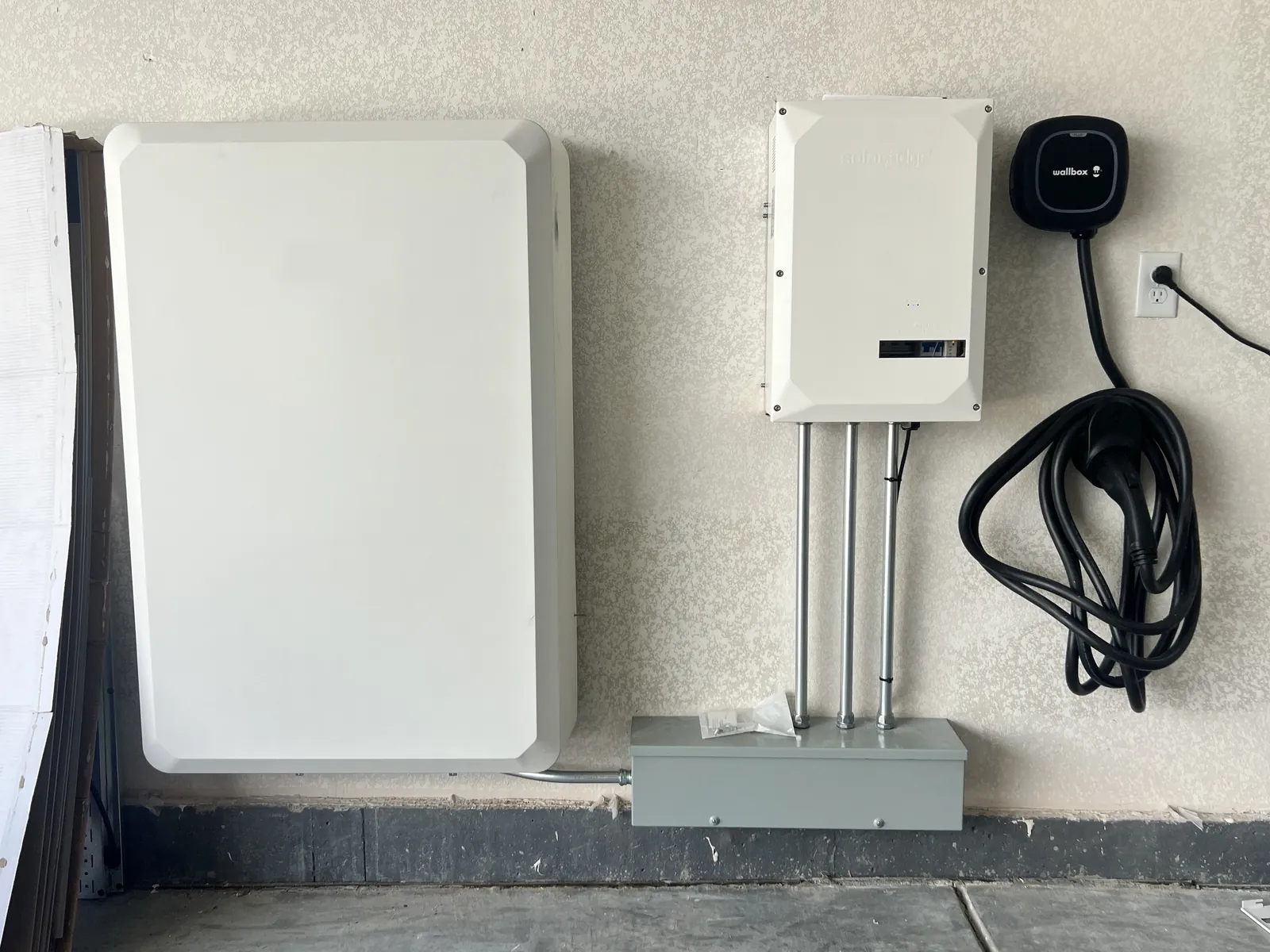
Usually a battery, an inverter, a disconnect or switching unit and a junction box, often next to an EV charger. Our answer on what all the solar equipment on your garage wall is labels each one using a real Front Range install.
How does cold weather affect a battery in Colorado?
Batteries have temperature limits for charging and running, and a garage that drops well below freezing matters. We place the battery where it stays within its limits, and the proposal notes it if an outdoor spot or an unheated garage changes anything.
What do you get in writing?
The circuits covered, the equipment, a written price before work starts, and the warranties in writing. Our workmanship warranty is 10 years, in writing. Battery and charger warranties come from the manufacturer and depend on the product.
How it works
From first call to finished job.
- 01
Decide what to keep on
We walk through your circuits with you and decide what has to stay on in an outage, from a short essentials list to most of the house.
- 02
Check the panel and the solar
We look at your electrical panel, your existing inverter if you have solar, and where the battery can mount.
- 03
Written proposal
You get the battery setup, the circuits it covers, the price and both warranties in writing.
- 04
Install, inspect, turn on
We install the battery and the switching equipment, the city or county inspects, the utility approves where required, and we show you the app.
Questions about home batteries
How long will a home battery keep my house running?
It depends on the battery's size, how much you keep on and whether the sun comes out to recharge it. A short essentials list stretches much further than running the whole house. We size it to what you want covered.
Can I add a battery to the solar I already have?
Usually, yes. Some systems take a battery that ties in on the power side, and some need equipment changes. Send us your inverter's brand and model, or a photo of its label, and we will tell you what fits.
Where does a home battery go?
Most go on a garage wall near the electrical panel. Some can go outside. We pick a spot that meets code for clearances and temperature and keeps the wiring runs short.
What is Xcel Energy's Renewable Battery Connect?
It is an Xcel Energy program for customers with solar and a battery, where the utility can draw on part of the battery during times of peak demand. Rules and funding change, so ask us what applies when you call.
Does a battery switch over on its own when the power goes out?
Yes, when it is set up for backup. The system disconnects from the grid and runs the backed-up circuits from the battery and, in daylight, the panels. You may see a short blink while it switches.
Answers on this site are general information about roofing and solar in Colorado, not legal, tax or insurance advice. Programs, codes and utility rules change; your written proposal and your insurer or utility have the final word.
Keep exploring
Related services
- SolarEverything in solar
- Commercial solarSolar for business and building owners on the Front Range, on the roof, over the parking lot or over the fuel pumps. We design it, permit it, install it and get it approved by the utility.
- Home solarRooftop solar for homeowners in the Denver metro and Front Range, designed around your roof, your shade, your electrical panel and the fire code. We also do the roof, so we tell you if it needs replacing first.
- EV chargersLevel 2 home EV chargers for Front Range homes, installed with a look at your electrical panel first, and paired with solar and a battery when you have them.
Answers to read first
Where we do this
Tell us about the roof, the panels or the building.
Send the form or call. We set up an assessment, then send a written proposal with the scope and the price.
Monday–Friday 9 a.m.–5 p.m.