
Roofs built for Colorado hail, wind and sun.
We replace, repair and document storm damage on homes and commercial buildings from Fort Collins to Pueblo. If your roof carries solar panels, we take them off, put the new roof on and put them back.
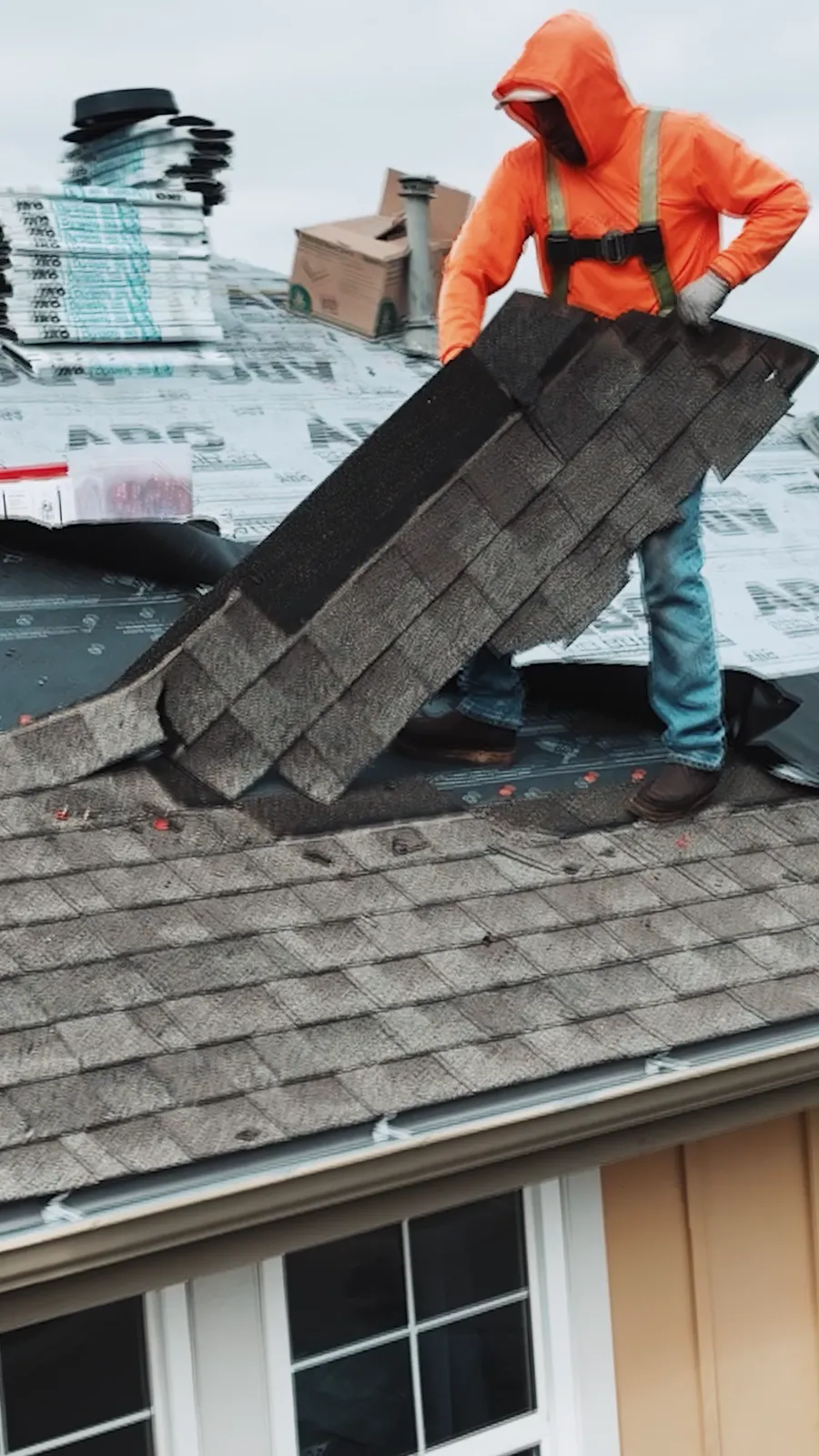
What we do
We replace and repair roofs on homes and businesses across the Denver metro and Front Range, including roofs with solar on top.
- 01Roof replacementWe tear off worn-out and storm-damaged roofs down to the deck and build a new roof system on homes across the Denver metro and Front Range. You choose the material and get a written price before work starts.
- 02Roof repairWe repair leaks, missing shingles, failed flashing and storm damage in one area of a roof, on homes and small businesses across the Denver metro and Front Range. We find where the water gets in, show you photos, and fix the cause.
- 03Storm and hail damageAfter hail or wind, we inspect your roof, document the damage with dated photos and can meet your adjuster on the roof. The claim and the deductible are yours, and your insurer decides coverage.
- 04Emergency roofingWater coming through the ceiling or a roof torn open by wind? Call (888) 240-1131 and we'll tell you when we can get there. We tarp or seal the roof to stop more water, document the damage, then plan the permanent fix.
- 05Commercial roofingWe repair, coat and replace flat and low-slope roofs on offices, retail, warehouses and multi-tenant buildings across the Denver metro and Front Range. TPO and other membranes, roof coatings, repairs and full replacements, on a written proposal.
- 06Roof and solarPanels off. Roof on. Panels back. When the roof under your solar needs replacing, we remove the array, replace the roof, flash every mount and reinstall the system, with one company on one schedule.
- AlsoSolar, batteries and EV chargersHome and commercial solar, home batteries, EV chargers and service for systems whose installer is gone.
- AlsoRoofs and solar for businessesFlat and low-slope roofs plus rooftop solar, carports and fuel canopies for building owners.
What does a roofing company in the Denver metro need to handle?
Five things: hail, wind, sun, roofs with solar on top, and commercial flat roofs. A Front Range roofer who only handles the first one will leave you calling someone else for the rest. We handle all five, and the sections below say how.
How does Colorado weather wear out a roof?
Hail. Storms roll off the foothills from late spring through summer, and hail bruises shingles, knocks off granules and dents vents and gutters. Much of it can't be seen from the ground. Our storm and hail damage service covers the inspection and the dated photos, and how hail damages a Colorado roof shows what to look for.
Wind. Front Range wind lifts shingle tabs, breaks the seal strip and peels ridge caps. One loose row lets the next gust get under more.
Sun. At a mile up there's less atmosphere between your roof and the sun, so UV dries shingles and sealants out faster than at sea level. Add freeze-thaw swings, sometimes in the same week, and small cracks become leaks. How long a roof lasts in Colorado covers what that means for your roof's age.
Snow. Snow load and ice at the eaves test flashing, valleys and low-slope sections every winter.
What do we check on a roof inspection?
Every inspection ends with photos and a straight answer, even when the answer is "nothing to do yet." Here is what Impact Energy & Roofing looks at:
- Every slope, photographed, including the ones you can't see from the ground
- Shingles, for hail bruising, granule loss, cracking and lifted tabs
- Flashing at walls, chimneys, skylights and valleys
- Pipe boots, vents and other roof penetrations
- Gutters, downspouts and soft metals, which show hail size and direction
- Attic ventilation and signs of moisture, where we can get access
- Soft spots in the decking underfoot
- Solar mounts and their flashing, if you have panels
A written summary with the photos follows, with repair or replacement options only if you need them.
What if there are solar panels on the roof?
Then the roof job includes the panels. We started in solar, so we take the panels off, put the new roof on, flash every mount and put the panels back, with one company on one schedule. See roof and solar and replacing a roof with solar panels.
Do you work on commercial roofs?
Yes. Offices, retail, warehouses and multi-tenant buildings, mostly flat and low-slope: TPO and other membranes, coatings, repairs and full replacements. See commercial roofing.
Repair or replace?
Most calls start with that question. We'll show you photos and tell you which one it is, even when the answer is the smaller job. Start with repair or replace your roof and what a new roof costs in Colorado, then see roof replacement or roof repair. Water coming in now? Go to emergency roofing.
How it works
Four steps, one company.
- 01
Roof assessment
We look at the roof, the attic and the gutters, and photograph what we find so you can see it too.
- 02
Options and a written price
We walk you through repair or replacement and the materials that fit your home. You get a written price before work starts.
- 03
Install
We do the work on the schedule in your proposal, with tarps down to catch debris and the old roofing hauled away.
- 04
Final walk-through
We walk the finished roof with you and go over the warranties your proposal spells out: our 10-year workmanship warranty and the manufacturer's product warranty.
Answers before you call
- How can I tell if hail damaged my roof without climbing up?
- How much does a new roof cost in Colorado?
- Do I need a new roof before solar, or when solar is already on it?
- Does hail damage solar panels?
- Does homeowners insurance cover hail damage to my roof?
- How long does a roof last in Colorado?
- What's under my shingles, and why does it matter?
- What are Class 4 impact-resistant shingles, and do I need them in Colorado?
- Should I repair or replace my roof?
- Why are my solar panels split up across the roof?
- My roof is leaking. What should I do right now?
Questions
What kinds of roofs do you work on?
Asphalt architectural shingles, Class 4 impact-resistant shingles and metal on pitched roofs, and membrane systems like TPO plus roof coatings on flat and low-slope roofs. That covers most homes and commercial buildings on the Front Range.
What do I get in writing before a roofing job starts?
A written price and scope for the work, the material you picked, and the workmanship and product warranties. If insurance is involved, your contract also spells out your right to cancel within 72 hours after your insurer denies the claim.
Do you do roofing for homes that don't have solar?
Yes. A roof job stands on its own. Solar is a separate decision, and you never have to talk about it to get a roof repaired or replaced.
Can you replace a roof in a Colorado winter?
Often, yes. We work through the cold months when the weather allows, and we move a job when snow, ice or a deep cold snap would hurt the install. Shingles need some warmth to seal down well, so we tell you when a day is too cold instead of pushing through.
How do I get my roof looked at?
Call (888) 240-1131 or send a request through our form. Tell us what you're seeing, whether a storm came through and whether there are panels on the roof, and we'll set a time for an assessment.
Answers on this site are general information about roofing and solar in Colorado, not legal, tax or insurance advice. Programs, codes and utility rules change; your written proposal and your insurer or utility have the final word.
Tell us about the roof, the panels or the building.
Send the form or call. We set up an assessment, then send a written proposal with the scope and the price.
Monday–Friday 9 a.m.–5 p.m.