
Home solar
Rooftop solar for homeowners in the Denver metro and Front Range, designed around your roof, your shade, your electrical panel and the fire code. We also do the roof, so we tell you if it needs replacing first.
Written price before work starts
The price depends on how many panels fit, the roof faces used, the electrical work and whether a battery is included.
Good fit if
- You own your home and plan to stay a while
- Your roof gets good sun on at least one face
- You want the roof checked by a company that also roofs
- You want to add a battery or EV charger now or later
Who is home solar for?
Home solar is for Front Range homeowners who want to make their own power from the roof they already have. We design the layout, pull the permits, install the system and get it approved by the utility. Because we also replace roofs, we tell you up front if the roof should come first. This page is part of our solar hub.
Why are the panels split across my roof?
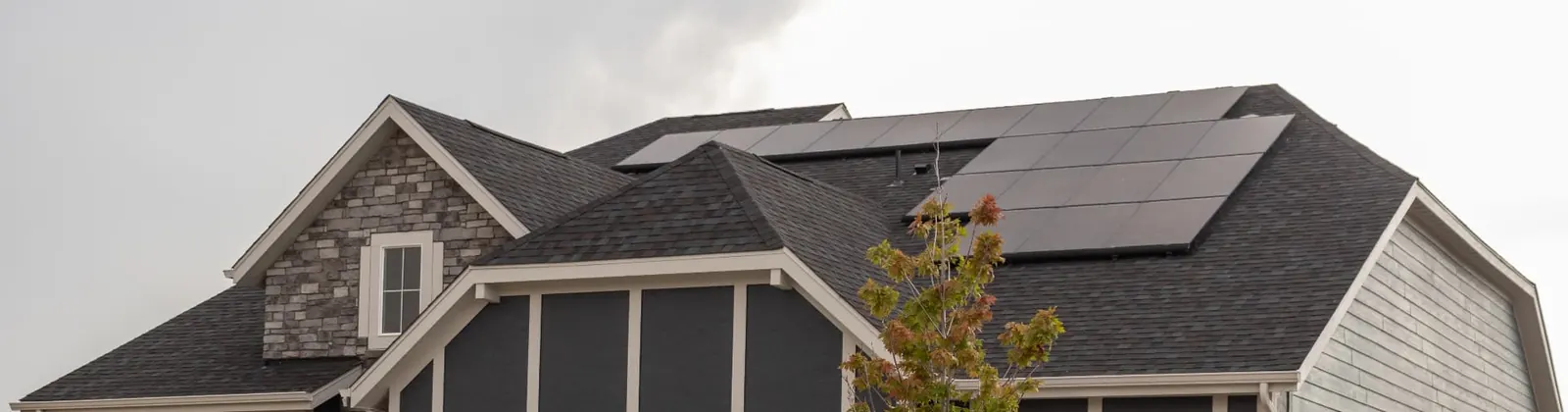
Two reasons: the sun and the fire code. Panels go on the faces that get good sun, and the code keeps clear paths on the roof so firefighters can get around. That's why many Front Range layouts look like puzzle pieces instead of one block. The specifics depend on your city, and the answer page on solar panel roof setbacks walks through the Denver rules.
Does my roof need to be replaced first?
If your roof has only a few years left, yes. Panels have to come off before a re-roof and go back on after, so doing the roof first saves pulling the panels later. We do both, on one schedule. Read replacing a roof with solar panels for how that works, or see the roof and solar service.
What happens in a power outage?
Grid-tied solar shuts off when the grid goes down. That is a safety rule, not a defect. A home battery is what keeps your chosen circuits on. The full answer is in does solar work during a power outage.
How does Colorado weather affect home solar?
The Front Range is sunny and often cold and clear, which panels like. Snow covers them for a while after a storm, then slides or melts off, usually faster on a sunny day. Hail is the bigger concern. Panels are built to take weather, but after a big storm check your monitoring app and look at the array from the ground. If something looks off, call us.
What about the tax credit?
The federal residential clean energy credit does not cover systems paid for after December 31, 2025. Utility programs come and go on their own schedules. Rules and funding change, so ask us what applies when you call.
What else can go with it?
Many homeowners add a battery, an EV charger or both, now or later. If you want to know what all the equipment on a garage wall does, read what the solar equipment on your garage wall is, and see EV chargers.
What do you get in writing?
A layout, the equipment list and a written price before work starts. Our workmanship warranty is 10 years, in writing. Panel and inverter warranties come from the manufacturer and depend on the product; many panels carry 25 years or more.
How it works
From first call to finished job.
- 01
Roof and site check
We look at the roof's age and condition, the shade, the electrical panel and a year of your power bills.
- 02
Layout and written proposal
You see which roof faces get panels and why, the equipment, the price and both warranties in writing.
- 03
Permits and install
We pull the permit, file with the utility and install the mounts, panels and wiring.
- 04
Inspection and turn-on
The city or county inspects, the utility approves the connection, and we show you the monitoring app.
Questions about home solar
How do I know if my house is a good fit for solar?
Look at roof faces that point south, east or west without much shade from trees or neighbors, a roof with years left on it, and an electrical panel with room. We check all three on the site visit.
Should I get solar if my roof is 15 years old?
Have the roof checked first. Panels stay up for a long time, and taking them off later to replace the roof adds a step. If the roof is close, we price the roof and the solar together.
How do I watch what my panels are making?
Your system comes with a monitoring app that shows production by day and month. We set it up at turn-on and show you what normal looks like, so a drop stands out.
What happens to the extra power my panels make?
The house uses it first. Extra power goes to a battery if you have one, then back to the grid under your utility's rules. In Xcel Energy territory that shows up on your bill; other Front Range utilities have their own terms.
Answers on this site are general information about roofing and solar in Colorado, not legal, tax or insurance advice. Programs, codes and utility rules change; your written proposal and your insurer or utility have the final word.
Keep exploring
Related services
- SolarEverything in solar
- Commercial solarSolar for business and building owners on the Front Range, on the roof, over the parking lot or over the fuel pumps. We design it, permit it, install it and get it approved by the utility.
- Home batteriesA home battery stores solar power for the evening and keeps the circuits you choose running when the grid goes down. We install batteries with new solar and add them to systems already on the roof across the Front Range.
- EV chargersLevel 2 home EV chargers for Front Range homes, installed with a look at your electrical panel first, and paired with solar and a battery when you have them.
Answers to read first
Where we do this
Tell us about the roof, the panels or the building.
Send the form or call. We set up an assessment, then send a written proposal with the scope and the price.
Monday–Friday 9 a.m.–5 p.m.