
One company for the building's roof and its solar.
For business and building owners who want the roof, the rooftop array, the parking carports or the fuel canopy handled by one team on one schedule.
What we do
We replace and repair commercial roofs and install commercial solar on rooftops, parking carports and fuel canopies across the Front Range.
- AlsoCommercial roofingRepairs and replacements for flat and low-slope commercial roofs, including roofs that will carry solar.
- AlsoCommercial solar: rooftops, carports, canopiesDesign, permits, install and utility approval for business solar.
- AlsoRoof and solar togetherWhen the roof needs work before or under the panels, we plan both as one job.
Can one company handle a building's roof and its solar?
Yes. We replace and repair commercial roofs, and we install solar on rooftops, over parking and over fuel pumps. When the same team plans both, the roof is ready before the racking goes down, and nobody has to referee a roofer and a solar company later.
Where have we done this on the Front Range?
A Denver-metro office rooftop, July 2026. Racking and panels across a flat roof, with downtown Denver on the horizon. The wiring came down the outside of the building on a lift to reach the electrical room.
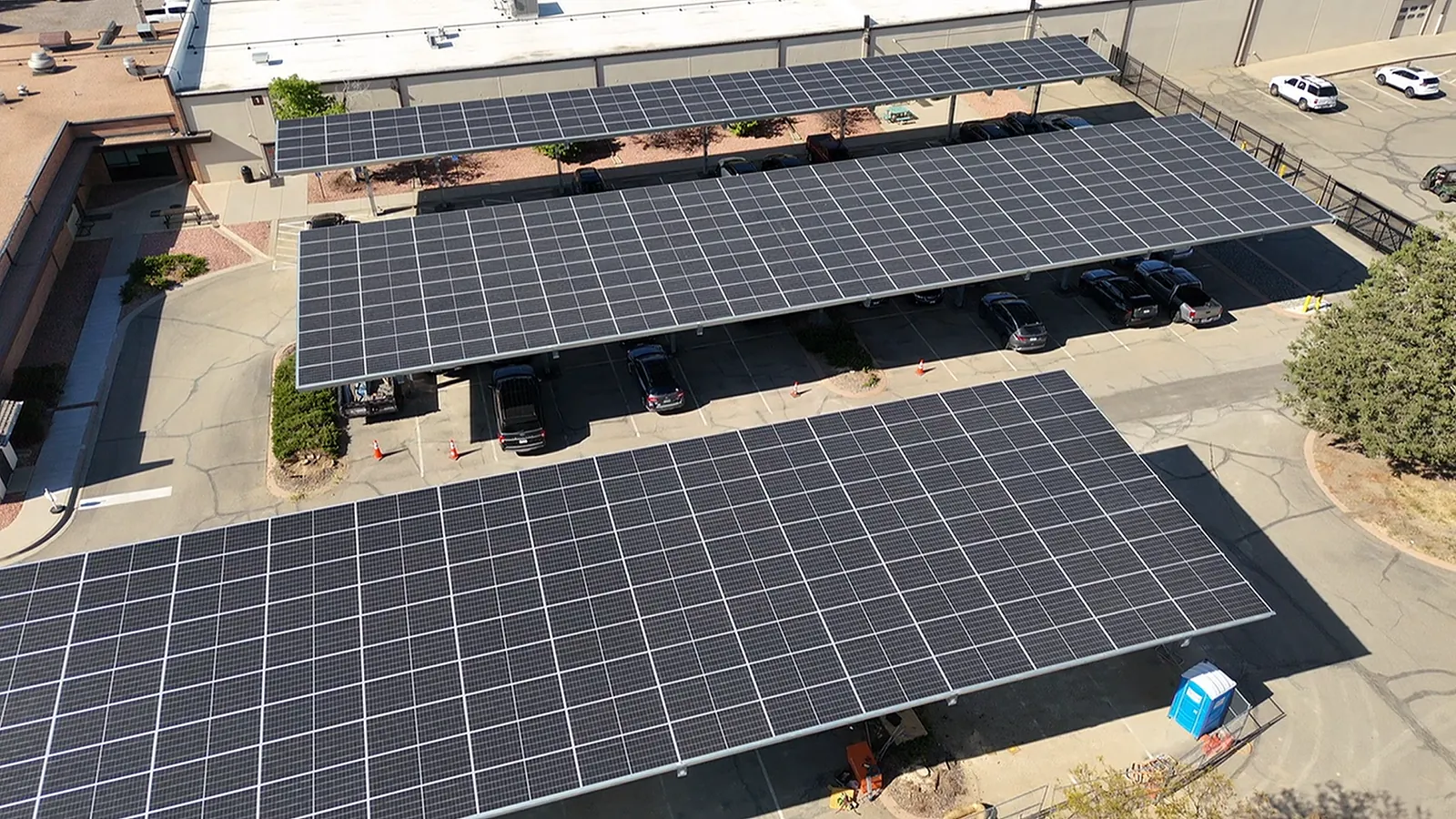
Parking carports, May 2026. Rows of solar carports over a parking lot. The panels make power and the cars get shade and a break from hail and snow.
A Colorado Springs fuel canopy, November 2025. Panels on top of the canopy that already covers the pumps, so the station uses a roof it already had.
See these jobs on solar projects.
When should the roof come first?
If the roof has only a few years left, replace it before the array goes on. Taking panels off a commercial roof later means extra labor, a shutdown and new permits. Our commercial roofing page covers the roof side, and roof and solar together covers how we sequence both.
What if the roof can't carry solar?
Then look at the parking lot. Carports and canopies give you a structure built for the panels, and they leave the roof alone. Our commercial solar page explains how we choose between rooftop, carport and canopy, and the answer on where a business can put solar walks through each option.
You get a written price before work starts.
How it works
Four steps, one company.
- 01
Walk the property
We look at the roof, the parking areas, the electrical room and the path the wiring would take between them.
- 02
Roof first, if it needs it
If the roof will not outlast the array, we say so and price the roof work with the solar.
- 03
One proposal, one schedule
You get a written proposal that covers the roof work and the solar, with the warranties spelled out, and one schedule built around your tenants or customers.
- 04
Install, inspect, turn on
We install, the building department inspects, the utility approves the connection, and the system goes live.
Answers before you call
Questions
Who should a building owner call first, a roofer or a solar company?
If the roof is near the end of its life, the roof decides the schedule, so talk to someone who does both. We look at the roof and the solar plan together and tell you which has to happen first.
Do you take commercial jobs outside the Denver metro?
Yes. We work along the Front Range, roughly two hours from Denver, from Fort Collins down to Pueblo. The fuel canopy we finished in Colorado Springs is one example.
Can you service commercial roofs and arrays after the install?
Yes. Because we handled both, one call covers a roof leak, a mount, an inverter fault or a monitoring alert.
Who owns the permits and the utility paperwork on a commercial job?
We prepare and file them as part of the project. The building owner signs what the utility and the city need from the owner, and we tell you exactly what that is.
Answers on this site are general information about roofing and solar in Colorado, not legal, tax or insurance advice. Programs, codes and utility rules change; your written proposal and your insurer or utility have the final word.
Tell us about the roof, the panels or the building.
Send the form or call. We set up an assessment, then send a written proposal with the scope and the price.
Monday–Friday 9 a.m.–5 p.m.