
Roof and solar
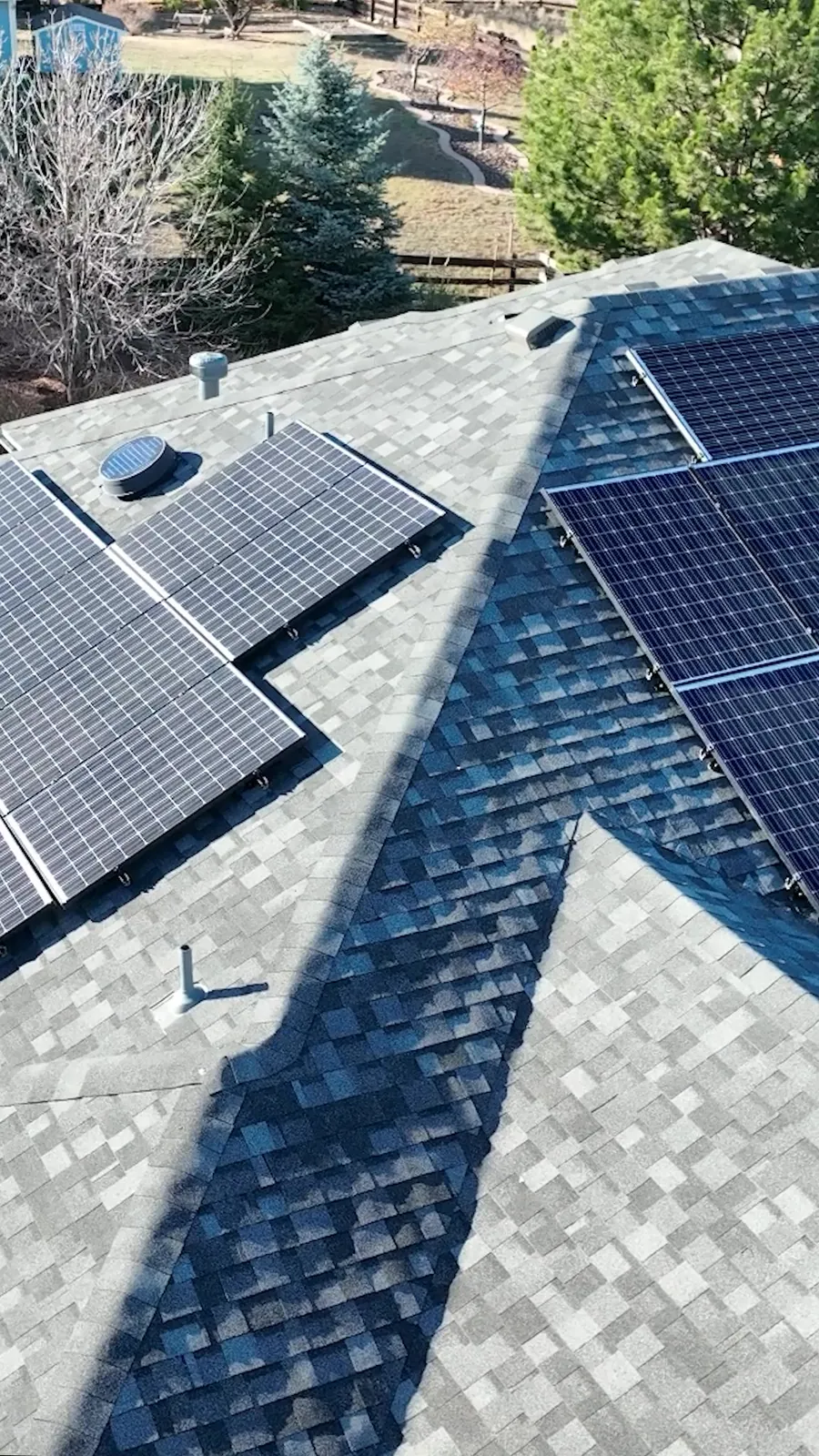
Panels off. Roof on. Panels back. When the roof under your solar needs replacing, we remove the array, replace the roof, flash every mount and reinstall the system, with one company on one schedule.
One written price for the roof and the panel work
Roof size and material, the number of panels and mounts, and the condition of the existing system set the price.
Good fit if
- Your roof is worn out or hail-damaged and has solar on it
- Water is showing up near panel mounts
- You're planning solar and your roof is getting old
- Your original solar installer is gone and the roof needs work
Panels off. Roof on. Panels back. When the roof under your solar needs replacing, we take the array off, replace the roof, flash every mount into the new roof, and put the system back and confirm it's producing. You deal with one company on one schedule instead of a solar company and a roofer taking turns. We do this across the Denver metro and Front Range. This is where our roofing and solar work meet.
Why is a roof under solar panels harder to replace?
Normally it takes two contractors: a solar company to take the panels off, a roofer to replace the roof, and the solar company again to put the panels back. That's three visits, two contracts and two schedules for you to line up, while your system sits idle.
The bigger problem shows up later. If a leak appears at a mount, the roofer says it's the solar company's flashing and the solar company says it's the roof. You end up in the middle.
We started in solar, and we do roofs. One company handles both halves, so the schedule and the answer to "who fixes this" both stay in one place.
How does panels off, roof on, panels back work?
- Before anything comes off, we check how the system is producing, photograph the array and wiring, and mark every mount location.
- Panels off. We shut the system down safely, disconnect it, and remove the panels and racking, labeled for reinstall.
- Roof on. Full tear-off to the deck, deck repairs where boards are soft, new underlayment and the new roof in the material you pick. See roof replacement for what goes into it.
- New flashing at every mount. Each mount is set and flashed into the new roof. This step decides whether you see leaks later.
- Panels back. Racking and panels go back on and the system is reconnected.
- Check and walk-through. We bring the system online, confirm it's producing, and walk the finished roof with you.
Replacing a roof with solar panels covers the questions owners ask before they start, and what's under your shingles explains the layers that go down under the array.
Can the layout change when the panels go back?
Sometimes. Fire code sets access pathways and ridge setbacks on roofs with solar, and local rules vary. We check the layout against the rules your city or county applies before the panels go back. Solar panel roof setbacks explains how those pathways work.
Which roof should go under solar in Colorado?
Architectural shingles, Class 4 impact-resistant shingles and metal all work under an array. Class 4 is worth pricing on the Front Range, since hail still hits the open slopes around the array. On flat commercial roofs with arrays, see commercial roofing. If hail hit the roof and the panels in the same storm, start with storm and hail damage.
What if I don't have solar yet?
If you're planning solar and your roof is getting old, replace the roof first so the panels don't have to come off for a re-roof later. See home solar for the system side. If your panels need repair or your installer is gone, see solar service and repair.
What's in writing?
One written price covers the roof and the panel work. Our workmanship warranty is 10 years, in writing. Your panel and inverter warranties stay with their manufacturers, and your written proposal spells out both.
How it works
From first call to finished job.
- 01
Record the system
We check how the system is producing, photograph the array and wiring, and mark every mount location before anything comes off.
- 02
Panels off
We shut the system down, disconnect it, and remove the panels and racking, labeled for reinstall.
- 03
Roof on
Tear-off to the deck, deck repairs, underlayment and the new roof, with new flashing set at every mount.
- 04
Panels back
We reinstall the racking and panels, reconnect the system, confirm it's producing and walk the finished job with you.
Questions about roof and solar
What if another company installed my panels?
We can still do the job. Tell us who installed the system, what equipment is on the roof and whether any installer warranty is still active. We check those details before we give you a price.
Will taking the panels off affect my solar warranties?
It depends on your panel, inverter and installer warranties. Some set conditions for removal and reinstall. Send us your paperwork and we'll go through it with you before the job starts.
How do I know my system works after it goes back on?
We record how the system is producing before we shut it down, then bring it back online after reinstall and confirm it's producing again before we call the job done.
Where do my panels go while the roof is being replaced?
Off the roof and out of the work zone. Panels and racking are labeled as they come off so each piece goes back where it belongs, and they stay protected until the new roof is finished.
Who do I call if water shows up near a mount after the job?
Us. We did the roof, the flashing and the panel work, so there's no second company to point at.
Answers on this site are general information about roofing and solar in Colorado, not legal, tax or insurance advice. Programs, codes and utility rules change; your written proposal and your insurer or utility have the final word.
Keep exploring
Related services
- RoofingEverything in roofing
- SolarAlso covered here
- CommercialAlso covered here
- Home solarRooftop solar for homeowners in the Denver metro and Front Range, designed around your roof, your shade, your electrical panel and the fire code. We also do the roof, so we tell you if it needs replacing first.
- Home batteriesA home battery stores solar power for the evening and keeps the circuits you choose running when the grid goes down. We install batteries with new solar and add them to systems already on the roof across the Front Range.
- Roof replacementWe tear off worn-out and storm-damaged roofs down to the deck and build a new roof system on homes across the Denver metro and Front Range. You choose the material and get a written price before work starts.
Answers to read first
Where we do this
Tell us about the roof, the panels or the building.
Send the form or call. We set up an assessment, then send a written proposal with the scope and the price.
Monday–Friday 9 a.m.–5 p.m.