
Solar, batteries and EV charging, installed by the people who explain them.
We design and install solar for businesses and homes across the Denver metro and Front Range, plus home batteries, EV chargers and service for systems already on the roof.
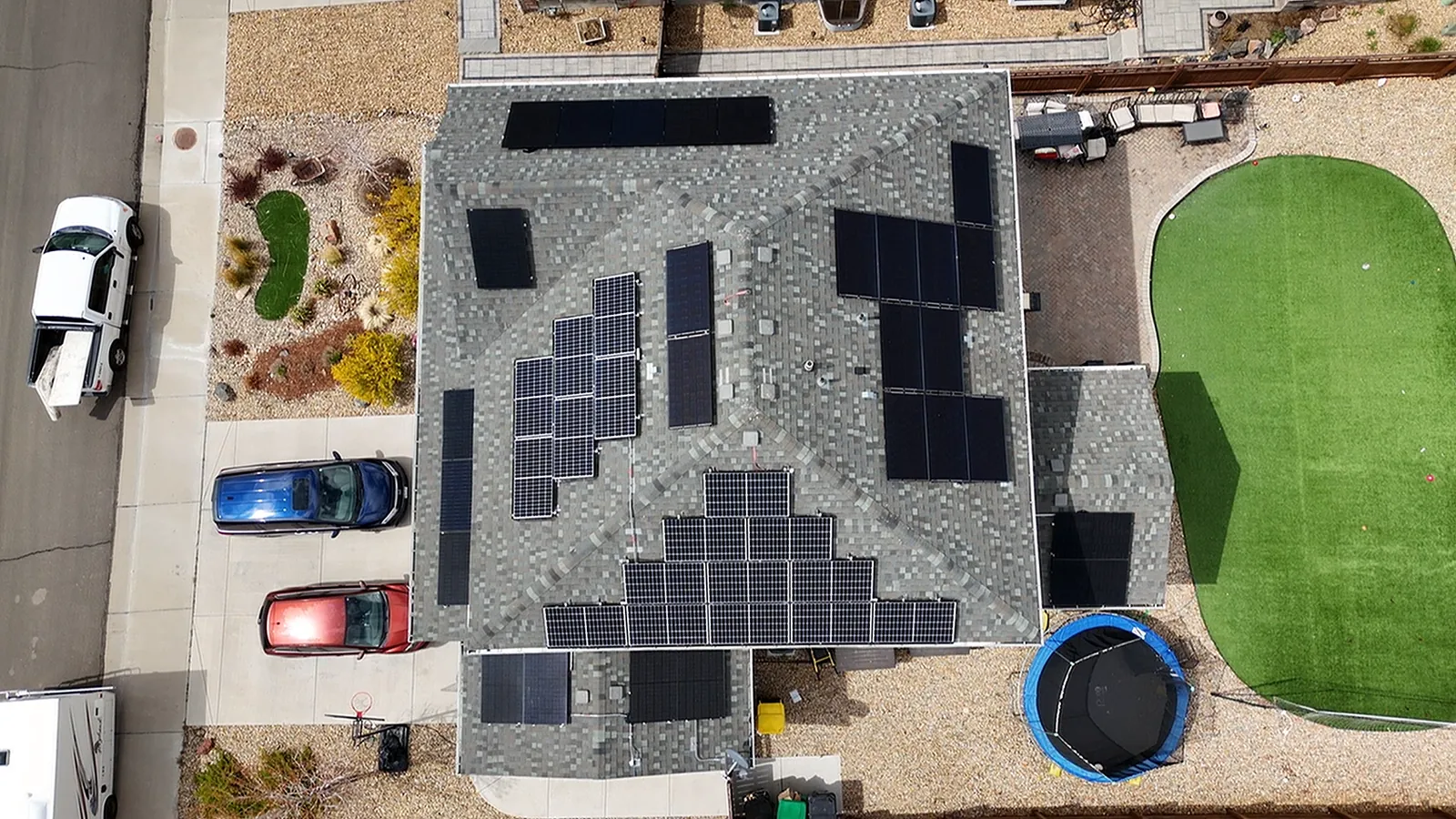
What we do
We install commercial and home solar, home batteries and EV chargers, and we service solar systems, including ones whose installer is gone.
- 01Commercial solarSolar for business and building owners on the Front Range, on the roof, over the parking lot or over the fuel pumps. We design it, permit it, install it and get it approved by the utility.
- 02Home solarRooftop solar for homeowners in the Denver metro and Front Range, designed around your roof, your shade, your electrical panel and the fire code. We also do the roof, so we tell you if it needs replacing first.
- 03Home batteriesA home battery stores solar power for the evening and keeps the circuits you choose running when the grid goes down. We install batteries with new solar and add them to systems already on the roof across the Front Range.
- 04EV chargersLevel 2 home EV chargers for Front Range homes, installed with a look at your electrical panel first, and paired with solar and a battery when you have them.
- 05Solar service & repairService for solar systems on the Front Range, including systems whose installer has gone out of business. We troubleshoot inverter faults and monitoring, fix leaks around mounts, and take panels off and put them back for roof work.
- 06Solar panel cleaningCleaning for solar panels on the Front Range, for systems we installed and systems we didn't. While we are up there we check the mounts, wiring and flashing, and we check production in your monitoring app before and after.
- AlsoNeed a new roof under the panels?If the roof has a few years left at most, we can take the panels off, replace the roof and put the panels back on one schedule.
Are you buying solar for a business or a home?
Two kinds of buyers: businesses and homeowners. A business usually wants to know where panels can go and how the project runs around tenants and customers. A homeowner usually wants to know what happens in a power outage, what all the equipment does and whether the roof will last as long as the panels.
Businesses: go to commercial solar for rooftops, parking carports and fuel canopies, or to the commercial hub if the building also needs a roof.
Homeowners: start with home solar, then home batteries and EV chargers.
Already have solar? Solar service and repair covers inverter faults, monitoring, leaks around mounts and systems whose installer went out of business, and solar panel cleaning covers dust, smoke residue and droppings, with a mount and wiring check while we are up there.
Why does Colorado make solar worth a look?
The Front Range gets a lot of sun and cold, clear days, and panels like both. The tradeoffs are real too: hail, snow load and wind. We design for those, and we tell you if your roof should be replaced before panels go on it.
What changed with the tax credit?
The federal residential clean energy credit does not cover systems paid for after December 31, 2025. Utility programs, like Xcel Energy's Renewable Battery Connect, are separate. Rules and funding change, so ask us what applies when you call.
What does it look like in practice?
See finished jobs on solar projects, or read the short answers below on outages, garage equipment and what to do if your installer is gone.
How it works
Four steps, one company.
- 01
Site and roof check
We look at the roof or the ground you want to use, the shade, the electrical panel and your power bills, and tell you if the roof should be replaced first.
- 02
Design and written proposal
You get a layout, the equipment list and a written price, with our 10-year workmanship warranty and the manufacturer warranties spelled out.
- 03
Permits and install
We pull the permits and file with the utility, then install the racking, panels, wiring and any battery or charger.
- 04
Inspection, utility approval and turn-on
The city or county inspects the work, the utility approves the connection and sets the meter, and then the system goes live.
Answers before you call
- Where can a business put solar?
- Is solar worth it in Colorado?
- My solar installer went out of business. What do I do first?
- Does solar work during a power outage?
- What happens during a commercial rooftop solar install?
- What is all the solar equipment on my garage wall?
- Can I add a battery to the solar system I already have?
Questions
Do you install solar for businesses or for homes?
Both. Businesses get rooftop, carport and fuel canopy systems. Homeowners get rooftop solar, batteries and EV chargers. The buyer, the paperwork and the timeline are different, so start with the page that fits you.
Can I add a battery or an EV charger without new panels?
Often, yes. A battery can be added to many existing solar systems, and a charger mostly depends on your electrical panel. We look at what you have before we quote.
Which utility areas do you work in?
Most of our work is in Xcel Energy territory around Denver, but the Front Range also has city utilities and electric co-ops with their own rules. Tell us your utility and we will tell you what its process looks like.
Does snow or hail stop solar from working in Colorado?
Snow cuts output until it slides or melts off, which on a sunny Front Range day is usually quick. Panels are built to take weather, but a big hail storm can still crack glass, so check your monitoring and your insurance after a bad storm.
What do I get in writing before a solar install starts?
A written proposal with the layout, the equipment, the price and both warranties: our 10-year workmanship warranty and the manufacturer's product warranty, which on many panels runs 25 years or more. You get a written price before work starts, and nothing goes on the roof until you sign.
Answers on this site are general information about roofing and solar in Colorado, not legal, tax or insurance advice. Programs, codes and utility rules change; your written proposal and your insurer or utility have the final word.
Tell us about the roof, the panels or the building.
Send the form or call. We set up an assessment, then send a written proposal with the scope and the price.
Monday–Friday 9 a.m.–5 p.m.